
Beauty, and nature’s quiet perfection.
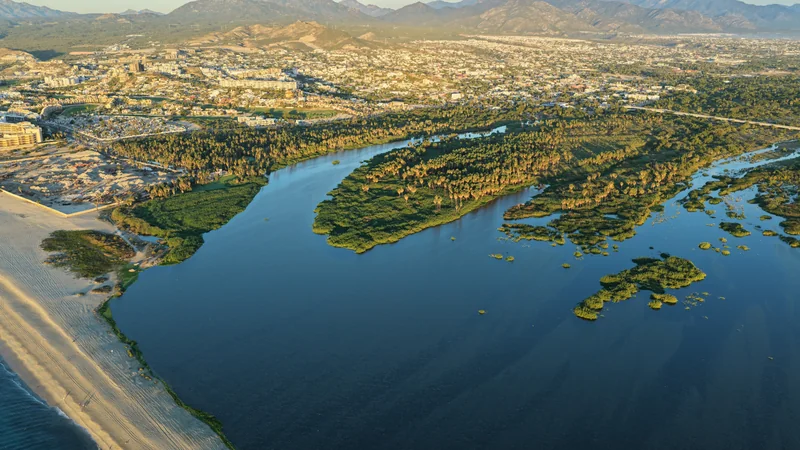
The San José del Cabo Estuary (Estero de San José del Cabo) is one of those magical corners that adorn the San José del Cabo region, a place whose appeal lies not only in its beauty but also in the astonishing perfection of its natural processes. It is a space that blends the wonder of creation with the simplicity of life itself, inviting quiet contemplation.
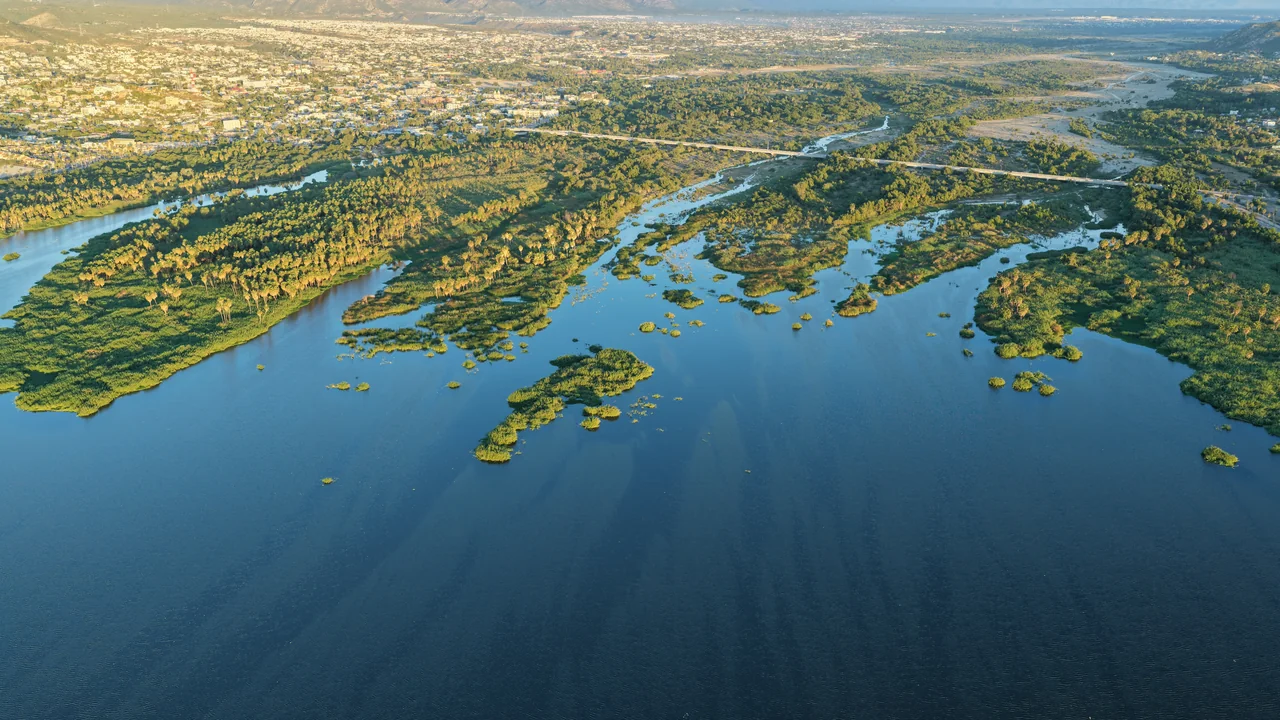
Estuaries are true masterpieces in the development of life on our planet. An estuary is a shallow body of water in a coastal zone, and these ecosystems are vital to both marine and land wildlife: they are home to a vast array of mammals, reptiles, amphibians, insects and fish. At the San José del Cabo Estuary you can spot representative species such as Belding’s yellowthroat, a warbler found only in Baja California Sur, and elegant herons, among abundant aquatic and land plants, mostly cattails (tule), reeds (carrizo) and the iconic native Washingtonia fan palms that shelter all this life.
Why an estuary matters.
Nature has also designed these places to act as a natural buffer against storms and surges. Estuaries are nurseries for many species of fish and crustaceans, and this one is the last resting stop for waterbirds and shorebirds migrating south: its Ramsar sheet records 217 bird species, 97 of them migratory. And, as if that were not enough, it is part of the San José basin that has long sustained farming and ranching in the valley, and that still recharges the aquifer the town depends on.
Such generosity invites us to reflect on our responsibility to protect these sanctuaries. Fragile and vulnerable, ecosystems like this one are threatened whenever people lose sight of the harm that careless management can cause.
A protected freshwater lagoon by the sea.
Baja California Sur is privileged to be home to what is considered one of the most important wetlands in northwestern Mexico. Protected as a State Ecological Reserve since 1994, and part of a Ramsar Wetland of International Importance since 2008, the reserve covers about 512 hectares (some 1,265 acres); the lagoon itself, roughly 40 hectares (about 100 acres). Its most distinctive feature: it is the only freshwater coastal lagoon in the Cape Region, held back from the Sea of Cortez by a thin natural sandbar that storms sometimes break open, creating a landscape like no other.
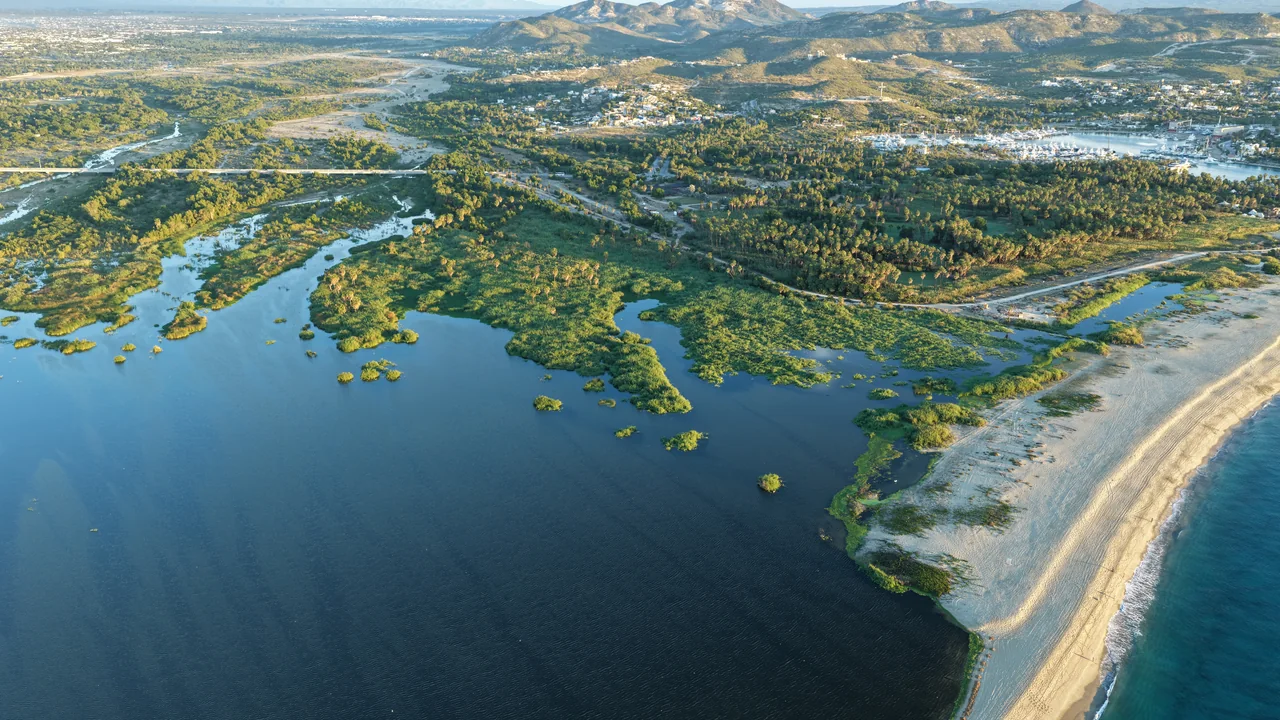
These same sandy shores, along Estuary Beach, offer another spectacular sight. Sea turtles nest on the beaches beside the estuary, mostly olive ridleys, with the occasional black turtle. Nesting runs from about June to December.
An impression that stays.
The responsible tourism these estuaries attract gives a positive boost to the local economy and the community around them. With its blend of immense natural beauty and a vibrant, multicultural population, the peninsula has captivated the rest of the world. Whether by land, sea or air, the San José del Cabo Estuary leaves a lasting impression on anyone who comes to experience and rediscover the wonders that Mother Nature has to offer.

Laura Valdemoros
Born in Argentina and based in Los Cabos, Laura is a bilingual content writer specializing in tourism, nature, gastronomy, lifestyle, luxury travel, culture and alternative education.
Read Laura’s full biography
She creates blogs, newsletters, articles, documentary scripts, advertising copy and subtitles in Spanish and English, combining research, creativity and clear communication.
With a university-level technical qualification in Tourism and postgraduate training in Environmental Management and Sustainable Development, she brings a broad perspective to every project. Her experience in museums, visitor services and educational guidance for homeschooling and unschooling helps her understand different audiences and turn complex ideas into approachable, engaging content.
Proactive and committed to every project she undertakes, Laura currently develops editorial and audiovisual projects, collaborates with nature-focused organizations and is working on a book about education outside the traditional school system.
Sources and photography
Story by Laura Valdemoros, with factual editing by What’s in Cabo. Sources checked November 2, 2026. Hero coordinates: Ramsar site 1827 information sheet (central coordinate of the San José estuary oasis). Laura’s biography was provided by the contributor.
- Ayuntamiento de Los Cabos · Natural reserves of Los Cabos: the 1994 and 2004 decrees of the San José del Cabo Estuary State Ecological Reserve (area, species, sandbar)
- Ramsar Sites Information Service · Site 1827, “Sistema Ripario de la Cuenca y Estero de San José del Cabo” (designated 2008): freshwater lagoon of the Cape Region, birds, basin and aquifer
- Ciencias Marinas 20(1), 1994 · “Seasonal distribution of aquatic birds in Estero de San José del Cabo, B.C.S., Mexico” (lagoon, sandbar and waterbirds)
- Pronatura Noroeste · The San José del Cabo Estuary, a natural jewel worth preserving
- CONANP report, 2022 (CEC file) · Sea turtle monitoring in the San José del Cabo Estuary State Ecological Reserve: olive ridley and black turtle
- Posta · Olive ridley nesting season on Los Cabos beaches
Story photographs © Adrián De Antoni, from his What’s in Cabo production archive. Guide cards use photographs from the linked What’s in Cabo guides.