
A historic town in the green heart of Baja.
Santiago, Baja California Sur, once called Aiñiñí by the Pericú people, is a picturesque, charming town about 89 km by road from Cabo San Lucas. It is proudly considered one of the oldest settlements in the state and is widely recognized as a “historic town.” A visit offers a relaxing pause in time, a chance to connect with tranquility, culture, and nature’s generosity in its most authentic form.
Where the town’s heritage begins.
The town’s rich heritage stems from its mission, originally named Misión de Santiago de los Coras Aiñiñí, founded in 1721 by the Italian-born Jesuit priest Ignacio María Nápoli and moved to this site in 1723. As you wander through its quiet streets, you will notice inviting, historic homes, many of which still keep their traditional facades. These architectural gems serve as a living testament to the region’s origins and the historic encounter between native cultures and the missionaries.
Mango trees in the middle of the desert.
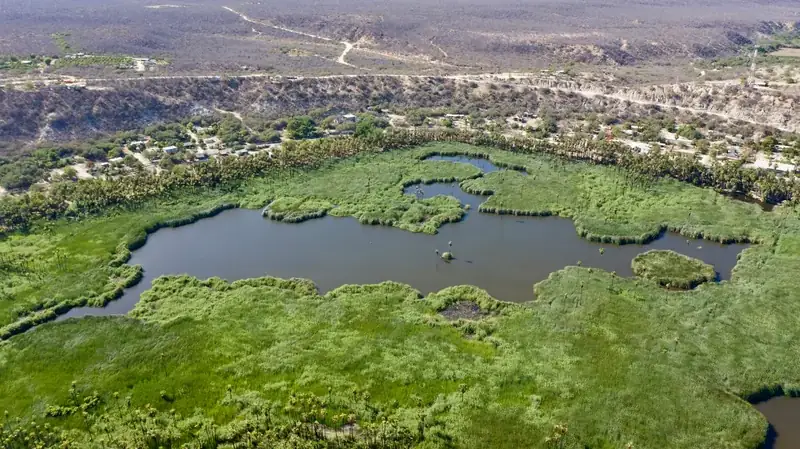
In contrast to the surrounding desert landscape, Santiago stands out for its lush agricultural orchards, which supply fresh, high-quality produce to the Los Cabos area and beyond. Its abundant, sprawling mango trees lend a unique freshness to the environment and provide the perfect backdrop for the Fiestas Tradicionales de Santiago. This includes the annual Mango Festival (Fiesta del Mango), held every July, which brings together the entire community and visitors alike for several days of celebration, music, local cuisine, and rich tradition.

Waterfalls, granite canyons and hot springs.
Beyond its valuable cultural heritage, Santiago serves as a gateway to unforgettable natural adventures. From the town, you can reach various traditional ranches that welcome travelers, offering a glimpse into the charm of the Sierra de la Laguna mountain range, complete with nature trails, waterfalls, and opportunities for birdwatching.
Among the must-see attractions nearby is the famous Sol de Mayo Waterfall in the Cañón de la Zorra (Fox Canyon), as well as the San Dionisio Canyon, where you can hike among striking granite formations and swim in natural, crystal-clear pools. The area is also an excellent base for visiting hot springs such as Santa Rita and El Chorro, perfect spots for a relaxing day outdoors.
Customs passed down through generations.
Visiting these places offers a genuine invitation to discover the true essence of Baja California Sur. It is a unique experience that allows you to immerse yourself in the daily life of the local ranching community, taste fresh, artisanal cheeses, prepare your own flour tortillas on a comal (griddle), and share in cherished customs that have been passed down from generation to generation.

Laura Valdemoros
Born in Argentina and based in Los Cabos, Laura is a bilingual content writer specializing in tourism, nature, gastronomy, lifestyle, luxury travel, culture and alternative education.
Read Laura’s full biography
She creates blogs, newsletters, articles, documentary scripts, advertising copy and subtitles in Spanish and English, combining research, creativity and clear communication.
With a university-level technical qualification in Tourism and postgraduate training in Environmental Management and Sustainable Development, she brings a broad perspective to every project. Her experience in museums, visitor services and educational guidance for homeschooling and unschooling helps her understand different audiences and turn complex ideas into approachable, engaging content.
Proactive and committed to every project she undertakes, Laura currently develops editorial and audiovisual projects, collaborates with nature-focused organizations and is working on a book about education outside the traditional school system.
Sources and photography
Story by Laura Valdemoros, with factual editing by What’s in Cabo. Sources checked November 5, 2026. Hero coordinates: OpenStreetMap, Plaza Santiago (way 142391425). Laura’s biography was provided by the contributor.
- Ayuntamiento de Los Cabos · Santiago municipal monograph: the Pericú name Aiñiñí, the mission of 1721 and its move to the present site in 1723
- Los Cabos Municipal Tourism Office · Santiago monograph (English): the mission’s timeline
- Visit Los Cabos · Rural guide (Guía Rural): the mission of 1721, orchards, the mango fiesta, ranches, cheeses and hot springs
- Visit Los Cabos · Santiago: the July fiestas, Sol de Mayo, the ranches and the hot springs nearby
- Visit Los Cabos · The waterfall of the Cañón de la Zorra at Sol de Mayo
- Diario Oficial de la Federación · Sierra La Laguna Biosphere Reserve decree (June 6, 1994): granite sierra and its birds
- Gringo Gazette · Santiago’s traditional fiestas, July 20–26, 2026
- Posta · The historic towns of Baja California Sur (Santiago in the state program)
- Discover Baja (David Kier) · The mission of Santiago el Apóstol: timeline and what remains
- OpenStreetMap · Plaza Santiago, Baja California Sur (coordinates)
Story photographs © Adrián De Antoni, from his What’s in Cabo production archive. Guide cards use photographs from the linked What’s in Cabo guides.