


Looking up on Baja’s roads
Traveling the roads of Baja also means looking up and having the ability to appreciate the wings that adorn our skies. When we venture into the peninsula, we often marvel at the contrast between the desert, the sea, and the mountains, yet it is when we pause in silence and lift our gaze that we discover the true vitality of this territory: a winged community that fills every corner with song, color, and movement. Many of these species are found in places that are very difficult to access due to the condition of rural roads. Far from being an obstacle, this geographic condition acts as a natural protective barrier. This also brings benefits for species like the robin, as they suffer less impact from human activity, allowing for a more stable development of the species by safeguarding their breeding, resting, and feeding cycles from urban noise and landscape fragmentation.
Off the paved roads
Exploring these rural dirt roads alongside Subaru México allows us to discover hidden paradises. Driving along winding trails, dry creek beds, and mountain slopes requires confidence, respect for the environment, and an authentic connection with the route—qualities that make it possible to reach natural enclaves where time seems to move at a different pace. For this reason, we decided that a series dedicated to the birds of the region would be the best way to showcase these beauties soaring through the skies of Baja. Through this audiovisual project, we aim to bring viewers closer to the ornithological richness of Baja California Sur, documenting not only the aesthetic beauty of their plumage and flight, but also the stories of adaptation and survival unfolding far from paved highways.
Science in the field
Together with professionals from the Autonomous University of Baja California Sur (UABCS), we have identified many of the species featured in this audiovisual work. Ornithologist Emer García accompanied us in this endeavor. Having the specialized guidance of Dr. José Emer García de la Puente Orozco, research professor at UABCS and head of the Habitat and Keystone Species Conservation Laboratory, brought scientific rigor and deep insight into local ecology. His expertise in studying the avifauna of Baja California Sur allowed us to better understand the habits, songs, and dynamics of every individual observed in the field, turning each day of filming into an exercise in scientific outreach and environmental awareness.
Arroyo de Las Choyas
The location where the sightings took place was Arroyo de Las Choyas, in Ejido San Antonio de la Sierra and its surrounding areas. Situated in the foothills of the Sierra de la Laguna, this riparian corridor represents an oasis of life where water, tree shade, and mountain vegetation create a privileged microclimate. In this transitional environment between scrubland, oak-pine forest, and seasonal stream beds, biodiversity finds shelter and food year-round, making Arroyo de Las Choyas an ideal setting to closely observe the region’s resident and endemic birds.

The San Lucas Robin
Among the protagonists of this journey, the San Lucas Robin (Turdus migratorius subsp. confinis) stands out in a very special way. The robin, also called the American robin, is a resident bird; it is not migratory. Unlike its northern continental relatives that undertake long seasonal journeys across North America, this subspecies evolved in geographic isolation at the southern tip of the Baja California peninsula, permanently adapting to the ecological conditions of the Sierra de la Laguna. In fact, various taxonomic authorities have debated its status as an independent species due to its marked distinctive traits, making a sighting a unique privilege for any nature lover.

How to recognize it
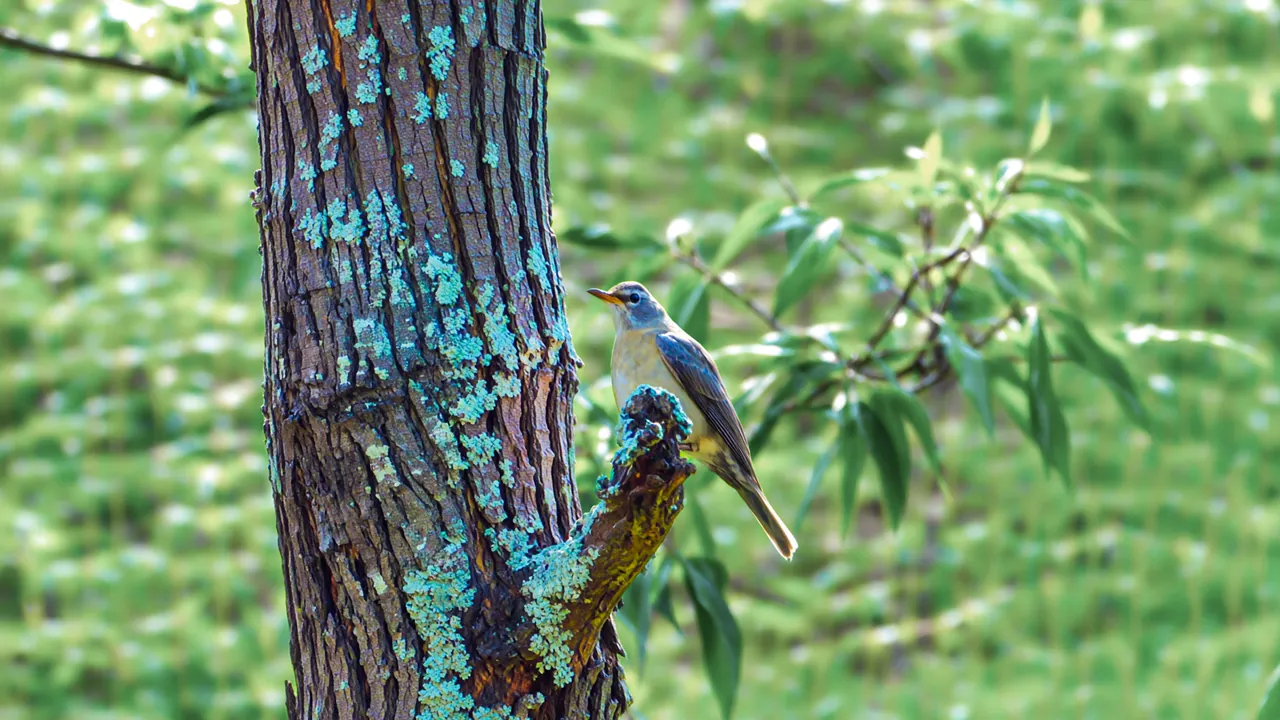
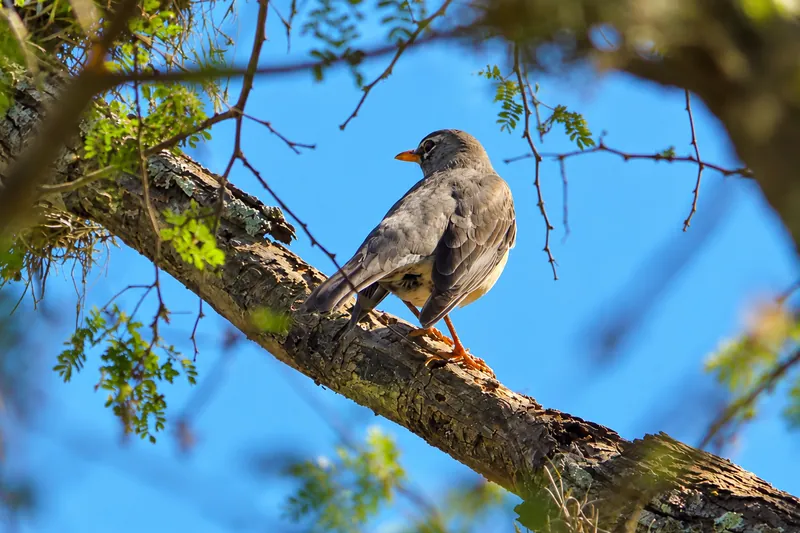
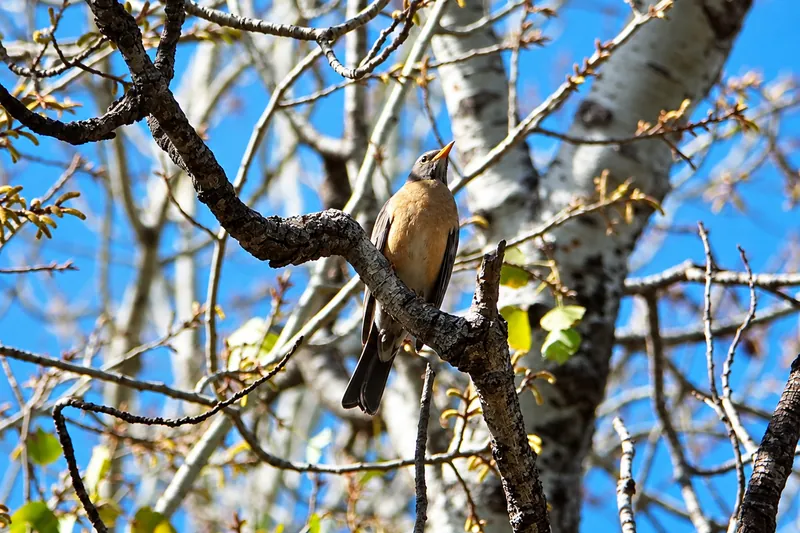
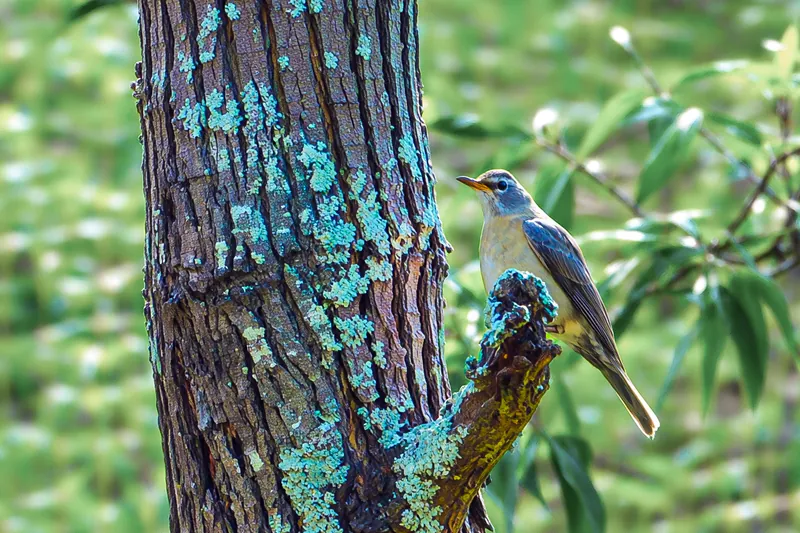
At first glance, the San Lucas Robin is distinguished from other populations of Turdus migratorius by its delicate appearance and soft hues. It measures between 23 and 25 centimeters in length and features noticeably paler plumage: its breast and belly exhibit a buff or pale tawny tone, rather than the deep reddish-orange characteristic of the continental robin. Its back is gray or grayish-brown, and its face highlights a long, continuous white supercilium (eyebrow) above the eye—a trait shared by both males and females without marked sexual dimorphism. It primarily inhabits the temperate oak and pine forests of the Sierra de la Laguna, between 1,000 and 2,000 meters in elevation, though during the cooler months it often descends toward canyons, streams, and adjacent clearings with tall trees, just as occurs in the surroundings of San Antonio de la Sierra.
What it eats, how it sings
Its diet is based mostly on invertebrates, such as beetles, caterpillars, and centipedes, in addition to fruits and berries. It normally feeds low on the ground. It is fascinating to observe its foraging behavior among the damp leaf litter of the stream: it moves forward with small, agile hops, stops abruptly, and slightly tilts its head to detect the movement of insects, larvae, or earthworms beneath the dry leaves and soft soil. When the season changes and wild fruits ripen, it supplements its diet with native berries and fruits, thus playing a dual fundamental ecological role: on one hand, it acts as a natural controller of insect populations, and on the other, it functions as an efficient seed disperser that fosters the natural regeneration of mountain flora. Its song, composed of melodious, unhurried phrases accompanied by soft contact calls, resonates among the trees at dawn and dusk, reminding us of the quiet vitality of these isolated forests.

On a branch above the arroyo.
Among bare branches. View on the map
Beside a lichen-covered trunk.
Traveling responsibly
Documenting the San Lucas Robin in its natural habitat not only holds aesthetic or scientific value; it also highlights the importance of the work carried out in these rural areas alongside Subaru México. Venturing into communities such as Ejido San Antonio de la Sierra carries a profound responsibility: traveling mindfully, respecting established trails, avoiding wildlife disturbance, and bringing visibility to the value of the rural territories that safeguard our biodiversity. This alliance demonstrates that responsible exploration can become a powerful tool for education and conservation, connecting audiences with places that rarely appear on conventional routes and inspiring admiration for the natural heritage that still remains intact in the heart of Baja.
Conservation is the future…
All of this effort finds its deepest meaning when we reflect on the urgent need to keep these ecosystems healthy. A clean stream, a deforestation-free oak-pine forest, and pollution-free rural roads are the indispensable foundation for endemic and resident species like the San Lucas Robin to continue thriving. Every element of the ecosystem is closely intertwined: the health of the soil and vegetation sustains the invertebrates and produces the fruits that birds feed on, while birds maintain the forest’s biological balance and ensure the continuity of its plants. Protecting these spaces in Baja California Sur means safeguarding a fragile and unique ecological balance in the world.
Conserving these natural sanctuaries is, ultimately, an intergenerational commitment. By caring for the forests, streams, and rural communities of Baja, we not only guarantee the present well-being of the local avifauna, but we also sow the conditions for a healthy, resilient, and vibrant environment. Only through respect, scientific knowledge, and responsible exploration will we ensure that these skies remain filled with songs and free wings, allowing future generations to travel these same roads, look up, and enjoy the natural magic of Baja California Sur just as we have the privilege of doing today.
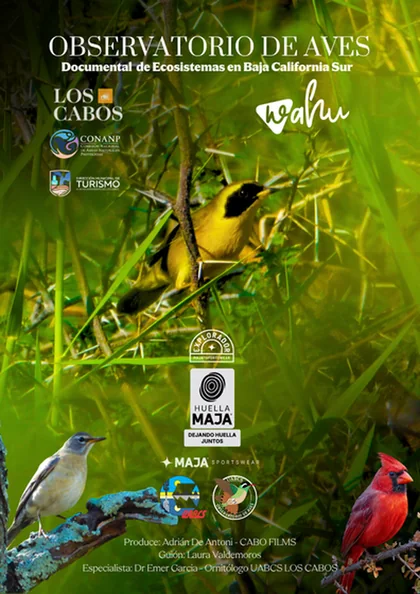
Observatorio de Aves, the documentary.
The San Lucas Robin was also filmed for Observatorio de Aves, the documentary produced by Adrián De Antoni with UABCS ornithologist Dr. Emer García about the birds of Baja California Sur.

Laura Valdemoros
Born in Argentina and based in Los Cabos, Laura is a bilingual content writer specializing in tourism, nature, gastronomy, lifestyle, luxury travel, culture and alternative education.
Read Laura’s full biography
She creates blogs, newsletters, articles, documentary scripts, advertising copy and subtitles in Spanish and English, combining research, creativity and clear communication.
With a university-level technical qualification in Tourism and postgraduate training in Environmental Management and Sustainable Development, she brings a broad perspective to every project. Her experience in museums, visitor services and educational guidance for homeschooling and unschooling helps her understand different audiences and turn complex ideas into approachable, engaging content.
Proactive and committed to every project she undertakes, Laura currently develops editorial and audiovisual projects, collaborates with nature-focused organizations and is working on a book about education outside the traditional school system.
Sources and photography
Story by Laura Valdemoros, written from her time at Arroyo de Las Choyas. Sources checked November 20, 2026. Hero coordinates: the point the author marked on Google Maps (23.6511, −109.9215), at Arroyo de Las Choyas, San Antonio de la Sierra, in the foothills of the Sierra de la Laguna, Baja California Sur. Laura’s biography was provided by the contributor.
- San Lucas Robin (Turdus confinis): species factsheet, BirdLife International
- American Robin: life history, All About Birds (Cornell Lab of Ornithology)
- American Robin, eBird (Cornell Lab of Ornithology)
Story photographs © Adrián De Antoni, edited by the photographer. Film details from Adrián De Antoni’s page on What’s in Cabo. Guide cards use photographs from the linked What’s in Cabo guides.