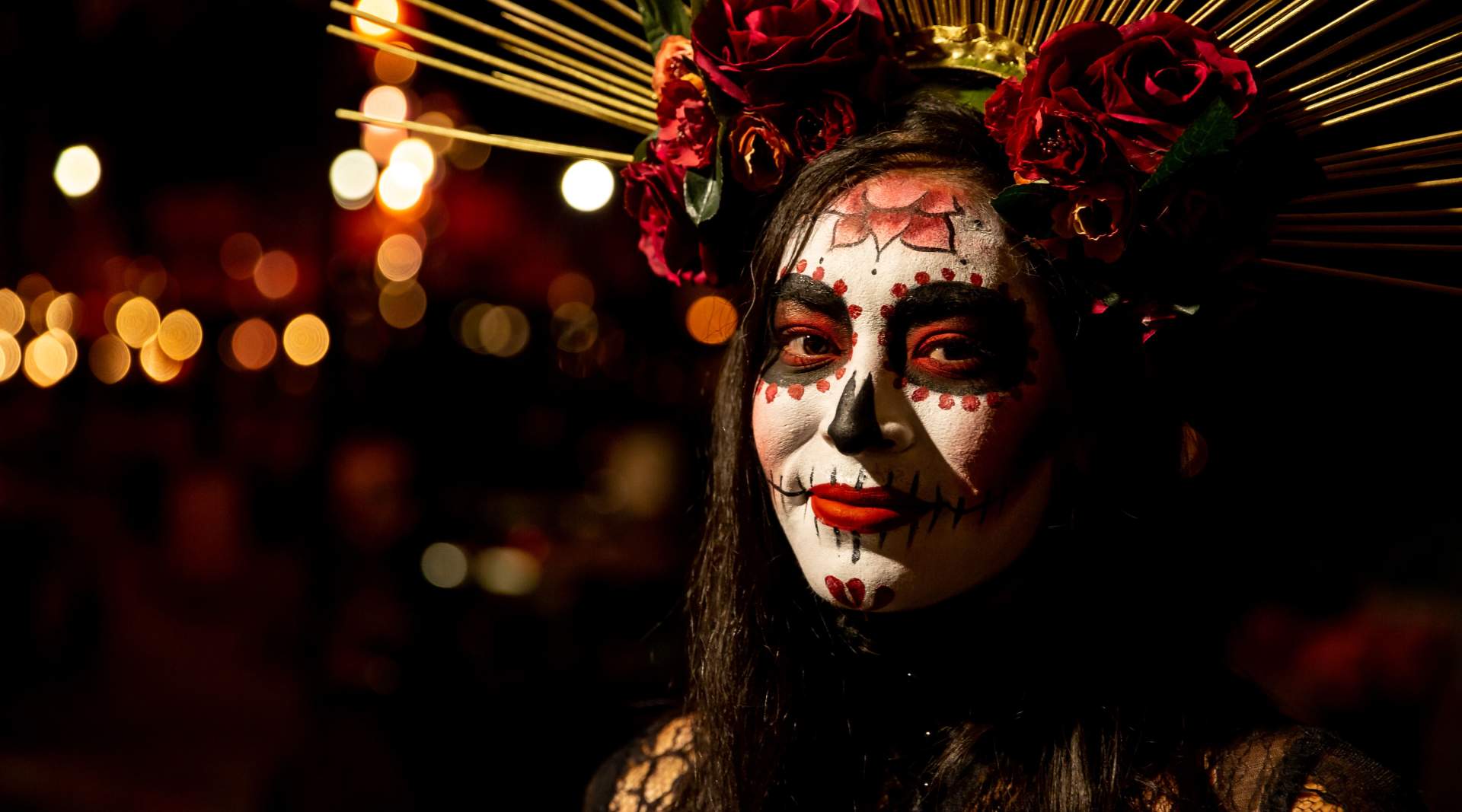
Día de Muertos, the Day of the Dead, is the Mexican tradition that commemorates the return of deceased relatives to visit the living. It is celebrated on November 1, All Saints’ Day, dedicated to children who have died, and November 2, All Souls’ Day, dedicated to adults. Families build ofrendas, altars with photographs, candles, marigolds (cempasúchil), paper cut-outs, sugar skulls, pan de muerto and the favorite dishes of the person remembered, at home and at the grave. UNESCO inscribed Mexico’s indigenous festivity dedicated to the dead on its Representative List of the Intangible Cultural Heritage of Humanity in 2008, after first proclaiming it in 2003.
The tradition fuses pre-Hispanic rites with the Catholic feasts brought by the Spanish in the sixteenth century, and its timing coincides with the end of the maize harvest. Marigold petals and candles are laid along the path from the cemetery to the home so that the souls find their way. The Catrina, the elegantly dressed skeleton seen everywhere during these days, comes from a 1910 print by José Guadalupe Posada.
In Los Cabos the municipal government celebrates through the Instituto de la Cultura y las Artes (ICA). Its Festival de Día de Muertos in San José del Cabo takes place around Plaza Mijares, the town’s main square, and the Panteón Municipal, the municipal cemetery. The 2024 festival, on November 2, opened with a parade from beside the cemetery along Boulevard Antonio Mijares to the Casa de la Cultura. The 2025 edition, named “Mictlán en el Desierto,” began on November 1 with a walk among the tombs of local historical figures in the cemetery and continued on November 2 at the plaza with music, dance, exhibitions and contests. In 2026 the festival filled both days: a cemetery walk called “Senda Forjadores de Los Cabos,” folk and classical dance, theater, an outdoor film, the parade of Catrinas from the cemetery area to the plaza, a Catrina runway and the awards for the altar, Catrina and pan de muerto contests, with hundreds of families in attendance.
The contests are the core of the San José del Cabo festival. In 2026 the ICA opened three public calls: traditional altars, built by high schools, universities and the general public, each with spokespeople who explain its meaning; Catrinas and Catrines, in a children’s category and a youth and adult category, who walk in the parade and on the runway in the plaza; and pan de muerto, baked by people born in Los Cabos using traditional techniques. Judging and awards are held on November 2 at Plaza Mijares.
Cabo San Lucas celebrates downtown with a program its municipal delegation groups under the name Mar de Ofrendas, more than eight festivals and activities in the first week of November. CANIRAC Los Cabos, the restaurant chamber, organizes the Catrin@s Parade, whose third edition was held in 2026: member restaurants and bars decorate vehicles and their staff dress as Catrinas and Catrines, from the Pabellón Cultural de la República along Lázaro Cárdenas to the Yenekamu sports field. Plaza Amelia Wilkes hosts the Mar de Ofrendas festival of altars, food and live music organized by the Asociación de Empresarios de Los Cabos, held for the second time in 2025 and including a prize for decorated storefronts. In the marina and off Médano Beach, Altares en el Mar brings together boats decorated with candles and marigolds.