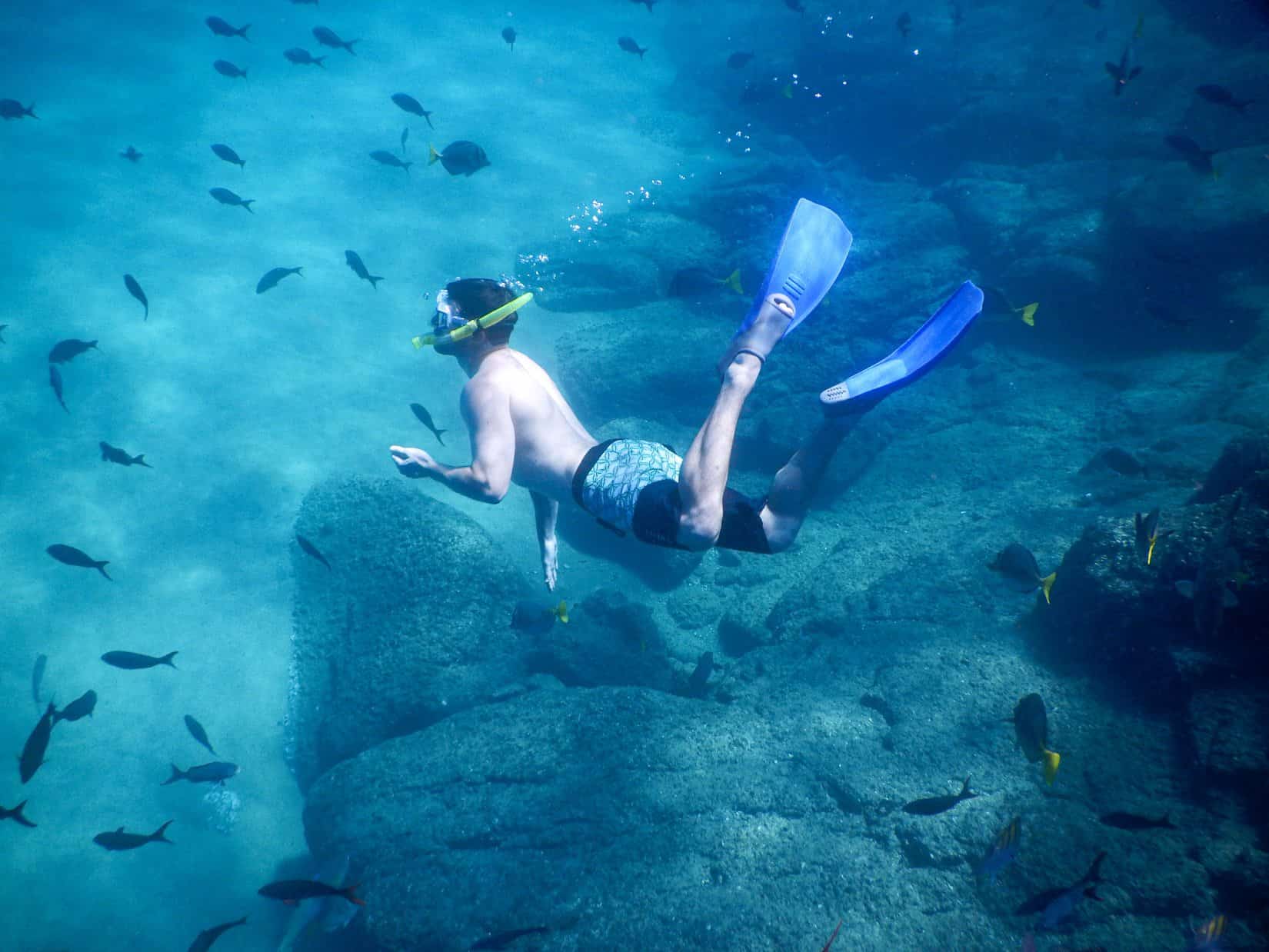
Cabo Snorkeling: 5 Beaches, the Park Rules and 5 Tours
Where to snorkel from the beach, what the protected area around the Arch charges, how warm the water gets, and five tours that take you to the reefs of Cabo San Lucas and the Tourist Corridor.
Updated October 2026 · Curated by the What’s In Cabo team
Cabo snorkeling works from the sand or by boat. Santa María and Chileno in the Tourist Corridor and Palmilla near San José del Cabo are usually swimmable bays with reef close to shore. Lovers Beach, by the Arch, is reached by boat or kayak inside a federal protected area that charges 125 pesos a day. Mornings bring the calmest water.
Snorkeling in Cabo San Lucas happens in the Sea of Cortez: on the sheltered side of Land’s End and in the coves of the Tourist Corridor. The Pacific-facing beaches are for the view, not for swimming. Our beach pages label every beach the same way: usually swimmable for the calm bays and swimming depends on the day where conditions change. Whatever the label, check the posted flag before you go in.
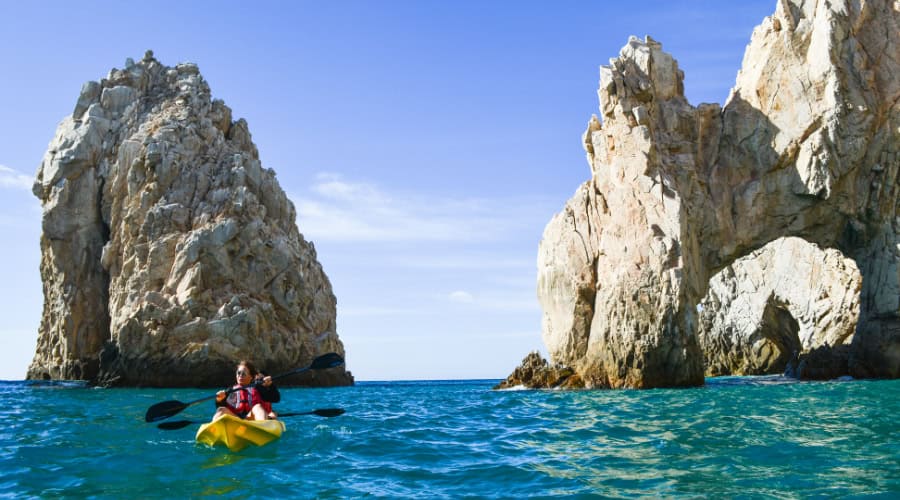
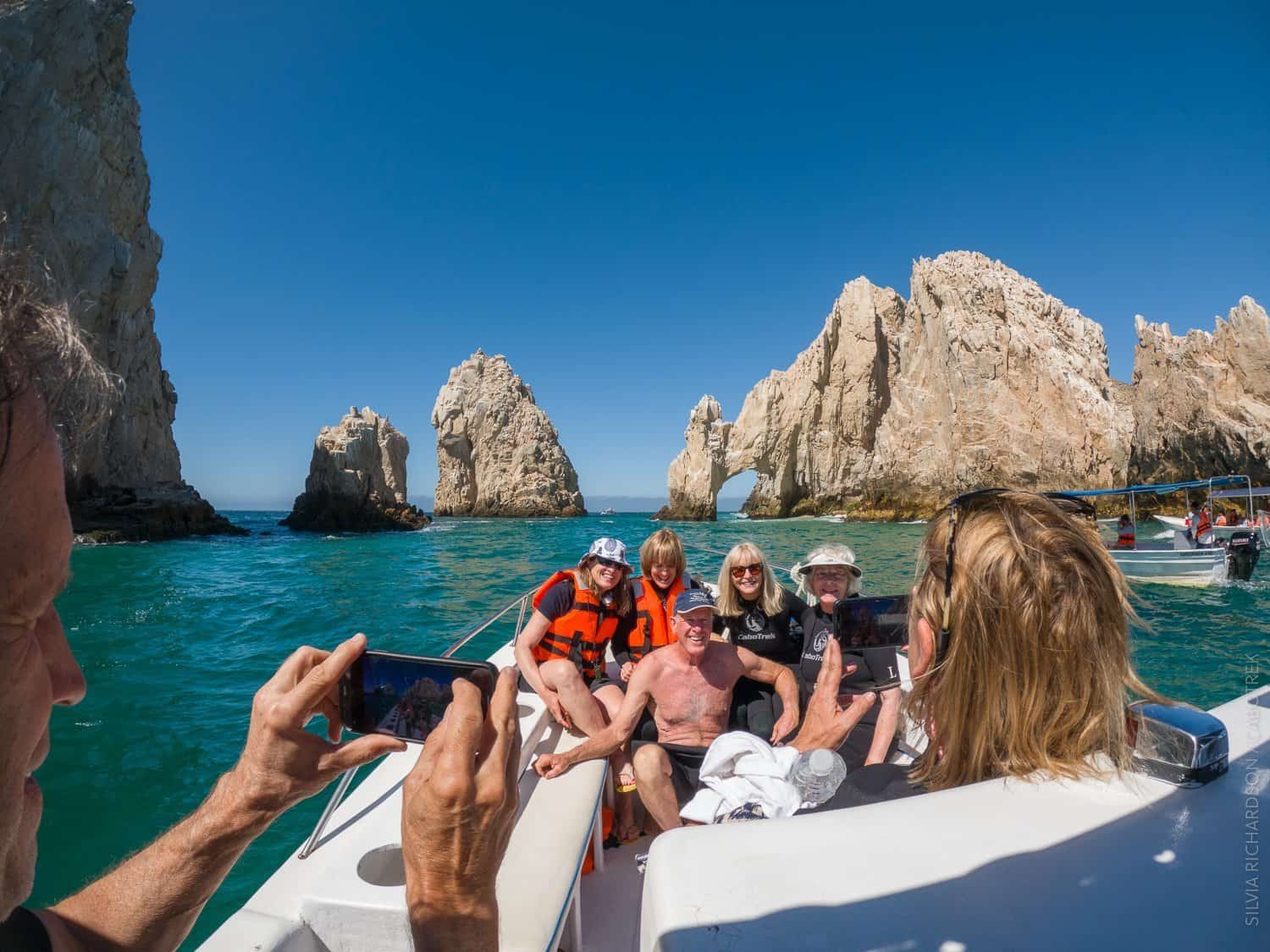
The protected area at the Arch. The Arch and Land’s End are part of the Cabo San Lucas Flora and Fauna Protection Area, decreed on November 29, 1973 and run by CONANP, Mexico’s protected areas agency. Boat and kayak trips to Lovers Beach, next to the Arch, snorkel in these waters. The rules for visitors:
Entry is 125 pesos per person per day, paid as a bracelet. Children under 12, older adults, pensioners, retirees and people with disabilities enter free with valid ID; students and teachers get 75 percent off, and Mexican nationals and foreign residents of Mexico 50 percent off.
Do not disturb the plants, the wildlife or the landscape. Fishing is not allowed.
In whale season, the whale-watching rules apply here too.
Follow the safety instructions of the area, the boat crew and your tour operator.
Some tours include the park fee in the price; if yours does not, ask how you will get the bracelet when you book. Some operators also charge a dock fee at check-in.
Cabo Pulmo. For the only coral reef in the Gulf of California, see our Cabo Pulmo National Park guide. Inside the park you snorkel only with an accredited guide, even from the beach at Los Frailes.
When to go. You can snorkel in Cabo all year. The sea is coolest in February, at about 70 °F (21 °C), so bring or ask for a wetsuit in winter, and warmest in August, at about 87 °F (30 °C). August to October is also the peak of storm season; month by month in our best time to visit Cabo guide. Mornings usually bring calmer water and clearer visibility, before the afternoon wind.
On the reef. Do not stand on the reef or touch marine life, and cover up with a rash guard instead of sunscreen, or use a biodegradable one.
How we choose: we list the beaches whose What's In Cabo pages name snorkeling as a main activity, and the tours in our directory built around snorkeling, checked on October 16, 2026. The swim label of each beach is the fixed one on its page. Prices are the ones each operator publishes, with the date we read them. Beaches come first, west to east, then tours A–Z by operator; the numbers are list positions, not a ranking. Updated October 2026.
Why we love it:A small beach between the granite rocks of Land's End, next to the Arch, reached only by water taxi, glass-bottom boat, kayak or paddleboard. Snorkelers stay on the Sea of Cortez side.
Cabo tip:Swimming depends on the day. Never go in on the Divorce Beach side, which faces the Pacific, and agree on your return ride before you land.
Why we love it:A horseshoe cove sheltered by granite points, with reef and tropical fish in shallow water. You can drive in or arrive on a boat tour from the Cabo San Lucas marina.
Cabo tip:Usually swimmable. Go in the morning for the clearest water, check the posted flag and keep off the reef.
Why we love it:The southern beach of Cabo Pulmo National Park, about two hours from San José del Cabo: snorkelers swim among the boulders of the point, where a small sea lion colony lives, always with an accredited guide.
Cabo tip:Swimming depends on the day, and only within 20 m of shore over the sand. The park fee is 125 pesos per person per day; bring cash and water.
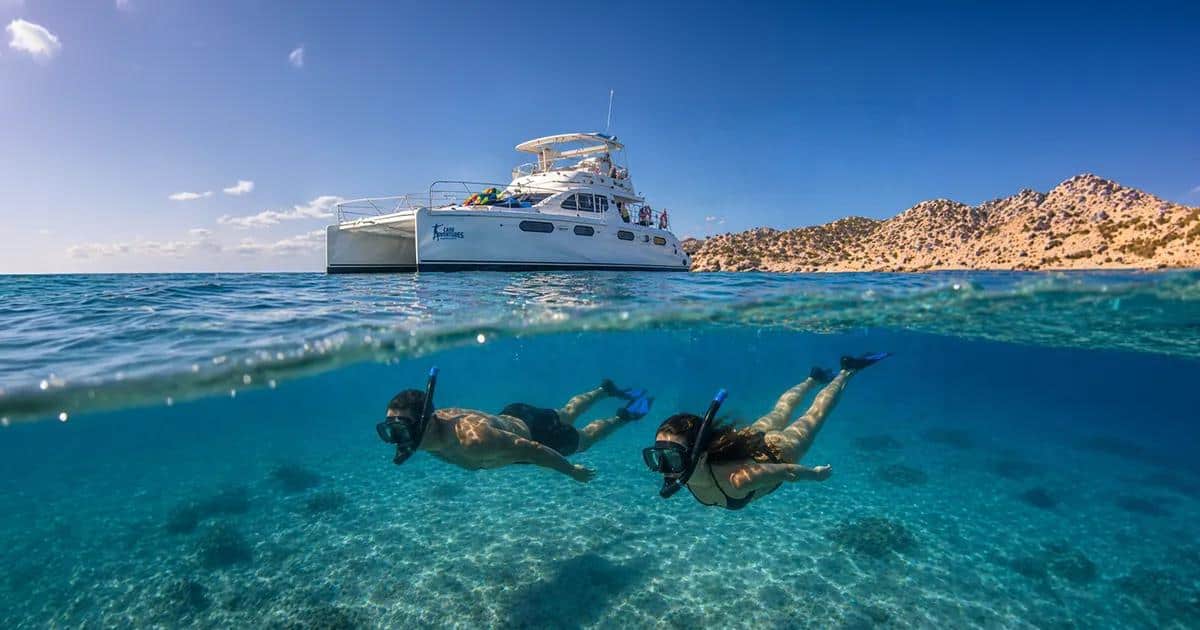
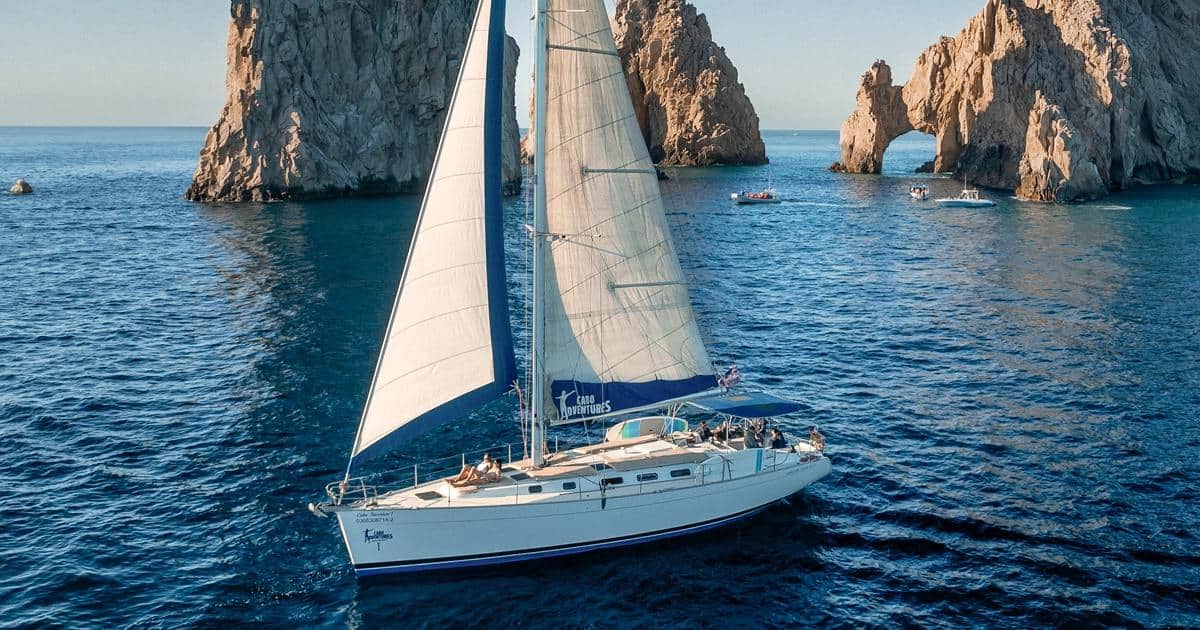
Why we love it:A 4-hour sailboat or catamaran trip from the Cabo San Lucas marina past the Arch, Lovers Beach and Pelican Rock, anchoring in a protected bay, usually Santa María, to snorkel and paddleboard.
Cabo tip:Minimum age 8. A dock fee of about 4 USD per person is paid at check-in, checked October 16, 2026.
Why we love it:A 4-hour power catamaran trip from the Cabo San Lucas marina with two snorkel stops, usually the east and west sides of Chileno Bay, or Santa María or Gavilancito reef when conditions call for it.
Cabo tip:Minimum age 5. A dock fee of about 4 USD per person, and hotel transport of about 15 USD if you want it, are paid at check-in, checked October 16, 2026.
Why we love it:A 3.5-hour Cabo Expeditions outing by inflatable boat, with hotel pickup, snorkeling in two bays and a pass by Land's End, the Arch, Lovers Beach and the sea lion colony.
Cabo tip:About 99 USD per adult and 79 USD per child, checked October 16, 2026, with guide, gear and a light lunch.
Why we love it:Guided snorkeling in groups of up to eight from the Cabo San Lucas marina: the 2-hour trip passes the Arch and the sea lion colony and snorkels at Pelican Rock; the 4-hour trip adds Santa María and Chileno bays.
Cabo tip:Shared trips cost about 59 USD for 2 hours and 99 USD for 4 hours, checked October 16, 2026, with the marine park fee included.
Why we love it:A High Tide Los Cabos trip of 3 hours with hotel transfers: a 2-hour guided paddle in glass-bottom tandem kayaks to the Arch, with a snorkel stop near Pelican Rock.
Cabo tip:From about 95 USD per person, checked October 16, 2026; minimum age 6. Book the 9 a.m. trip: afternoons are windier, and some days the group reaches Pelican Rock but not the Arch.
Santa María and Chileno in the Tourist Corridor and Palmilla near San José del Cabo are usually swimmable bays with reef close to shore. Go in the morning and check the posted flag before you go in.
Do you pay a fee to snorkel at the Arch and Pelican Rock?
Yes. The Arch and Land's End are part of the Cabo San Lucas Flora and Fauna Protection Area, which charges 125 pesos per person per day as a bracelet. Children under 12, older adults and people with disabilities enter free; some tours include the fee in the price.
How warm is the water for snorkeling in Cabo?
About 70 °F (21 °C) in February, the coolest month, and about 87 °F (30 °C) in August, the warmest. In winter, bring or ask for a wetsuit.
Can you snorkel on your own at Cabo Pulmo?
No. Inside Cabo Pulmo National Park you snorkel only with an accredited guide and a life jacket, up to 8 people per guide, even from the beach at Los Frailes.
Can you snorkel at Divorce Beach?
No. Divorce Beach faces the Pacific and is not for swimming. At Land's End, snorkelers use the Sea of Cortez side, at Lovers Beach and around Pelican Rock.
What time of day is best for snorkeling in Cabo?
The morning. The water is usually calmer and clearer before the afternoon wind, and some kayak trips cannot reach the Arch on windy afternoons.